Climate and weather in Norway
What is the climate like in Norway?
Norway's climate varies from north to south and between coast and inland. Along the west coast there is a maritime climate with mild winters, cool summers and a lot of precipitation for much of the year. Inland and in the eastern parts of the country the climate is more continental, with colder winters and warmer summers. In the north, above the Arctic Circle, there is a subarctic climate with long, dark and cold winters and short but bright summers. Norway's landscape with fjords, mountains and coast contributes to the fact that the climate can vary greatly within short distances.
What is the weather like in Norway?
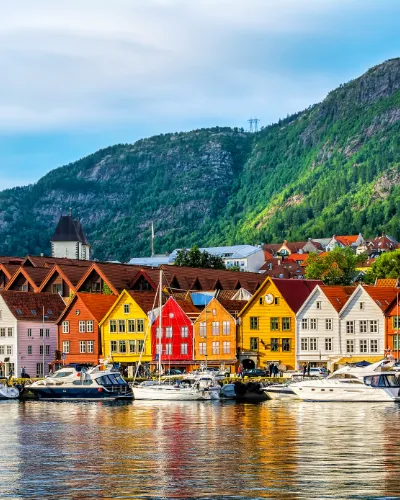
Along the west coast of Norway, in cities like Bergen, the weather is often rainy and windy for much of the year thanks to moist air from the Atlantic. Bergen is one of Europe's rainiest cities, with over 2,000 millimeters of precipitation per year. In Oslo and the eastern parts of the country, winters are cold with snow and frost, while summers can be warm and sunny with temperatures sometimes reaching 25 to 30 degrees. In northern Norway, in areas like Tromsø and Finnmark, winters can be very cold with temperatures below minus 20 degrees and blizzards. In the north, there is also midnight sun during parts of the summer, when the sun does not set at all and it is light 24 hours a day.
Rainfall
★ Bergen on the west coast of Norway is one of Europe's rainiest cities with over 2000 millimeters of precipitation per year.
The mountains
★ The Norwegian mountains act as a natural weather barrier and trap large amounts of moisture from the Atlantic Ocean. This means that the western side of Norway is significantly wetter than the eastern side.